
25 December 2025 - Organization
This year, Osservatorio Nessuno embarked on projects in every direction: growing our technical work, expanding our software portfolio, strengthening our advocacy, and improving our internal structure.
We welcomed our first non-founding members, and we are deeply grateful for their participation. We presented the Osservatorio and both its advocacy and technical work at several events, took part in studies on NGOs and digital rights, taught classes to journalists, and contributed to work at the IETF.
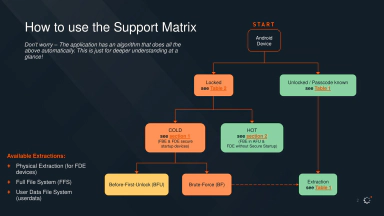
We showcased a pre-release of Bugbane, released and deployed Patela and then upgraded it, joined the EDRi network, researched mobile forensics tools and spyware, and launched a spin-off NGO.
We also received unprecedented support: people donated funds, hardware, time, and knowledge. This collective effort made a real difference and allowed us to do more than ever before.
As some may have noticed, we also carried out a significant website redesign and reorganization. Beyond its updated visual identity, the new website focuses on accessibility and performance. It is fully static and uses no JavaScript, allowing it to work reliably in Tor Browser even with the safest security settings, while maintaining good accessibility.
We are grateful to everyone who reported accessibility issues in the past, and we remain committed to continuously reviewing and improving the website based on this feedback.
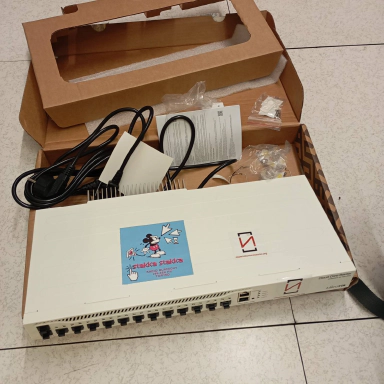
Building on our experience of doing BGP from our own basement, we wanted to push for even greater independence and control. The first step, however, is navigating a complex landscape of commercial terms—peering, transit, backhaul—and engaging with a daunting number of intermediaries. While France, for instance, has a long-running tradition of nonprofit (or at least associative) ISPs, Italy has had very few examples, none of them fiber-powered. While we are not yet digging our own trenches, we aim to start by using the EU-funded Open Fiber network, pursuing economic sustainability in the short term and greater control over the longer horizon.
For this purpose, together with a group of friends, we founded ProcioNet APS. For English speakers, procione means “raccoon” in Italian, hence the wordplay with the Net suffix. APS stands for something close to a Social Promotion Association, which differs from the Osservatorio’s OdV (Volunteer Organization) status. ProcioNet aims to set up a network for its members, focused on research, accessibility, and reducing the digital divide. Services will be provided exclusively to members and, where applicable, at cost price.
Beyond being a technically challenging and enjoyable project, ProcioNet pursues one of Osservatorio Nessuno’s core political goals: reclaiming infrastructure. By doing so, we plan to layer internet-access–specific advocacy and research on top of it, pursuing privacy-preserving deployments where possible (an approach rarely taken by commercial providers), and resisting censorship both through technical means where feasible and through advocacy where it is not.
In the spring, we began the process of joining EDRi as affiliates, the first step toward becoming full members. We are very grateful to the EDRi membership team for their friendliness and for guiding us through the process, as well as to all EDRi members who supported our participation.
EDRi is organized into working groups that address digital rights issues from different perspectives and through different strategies. As we do not have dedicated professional advocacy staff, we are currently focusing on issues closest to our mission, such as limiting the increase of securitization, the use of spyware against civil society, and efforts to weaken or bypass encryption, including initiatives like Chat Control.
We are still new to this space, and observing how the broader civil society ecosystem operates has been highly instructive. We hope to deepen our involvement and participate more actively, including in more in-person meetings, throughout 2026.
This year, members of Osservatorio Nessuno took part in a wide range of events, from academic cryptography conferences to documentary and journalism festivals, from self-organized gatherings to international standards bodies. Almost all of them were self-funded by the going members, with only a few exceptions linked to our professional work. Despite limited resources, we managed to attend, contribute, and learn across communities that rarely meet in the same room.
Through these experiences, we observed how cost, travel, and accessibility shape who can be in the room and, by extension, who helps shape the technologies and policies that define the Internet itself. Most of this is not new; it’s been well studied and reported by other NGOs and researchers. This is simply our firsthand account!
We chose events based on a mix of personal interest, existing community ties, whether we knew people or trusted the atmosphere, and relevance to our advocacy and networking work as an organization. To reiterate, we did not use any Osservatorio funds for these trips. We are all volunteers, and our limited organizational finances are fully dedicated to maintaining our infrastructure, servers, utilities, and bandwidth, which already keeps our budget tight.
| Event | Type | Area | Location | Participants | Ticket (€) | Cost estimate (€) | Total (€) |
|---|---|---|---|---|---|---|---|
| FOSDEM | Community | Open-source | Brussels | 2 | 0 | 400 | 800 |
| Real World Crypto | Academic | Cryptography | Sofia | 1 | 380 | 500 | 880 |
| IT NOG | Community | Networking | Bologna | 1 | 0 | 100 | 100 |
| SGKM | Academic | Media studies | Chur | 1 | 290 | 600 | 890 |
| Hackmeeting | Community | Activism / Tech | Cagliari | 3 | 0 | 150 | 450 |
| TumpiCon | Private | Security | Pinerolo | 3 | 0 | 200 | 600 |
| Global Gathering | Community | Advocacy | Estoril | 2 | 40 | 500 | 1080 |
| DIG Festival | Community | Journalism | Modena | 1 | 0 | 100 | 100 |
| Romhack | Community | Security | Roma | 1 | 20 | 300 | 320 |
| EDRi Privacy Camp | Community | Advocacy | Brussels | 1 | 0 | 300 | 300 |
| Tor Community Gathering | Community | Tor | Odense | 2 | 0 | 400 | 800 |
| RIPE | Int’l Org | Networking | Bucharest | 1 | 400 | 900 | 1300 |
| Transparency.dev | Community | Development | Gothenburg | 1 | 0 | 500 | 500 |
| Linux Day | Community | Open-source | Torino | 1 | 0 | 0 | 0 |
| IETF | Int’l Org | Standards | Montreal | 1 | 990 | 1600 | 2590 |
| 39C3 | Community | Activism / Tech | Hamburg | 4 | 190 | 600 | 3160 |
See the Tor Projects’s blog post for a summary fo the Tor Community Gathering and a bonus picture.
This table does not include all the events where we were invited to participate, or which were remote, such as presenting at Nexa Center, or at Primavera Hacker, where we gave a talk remotely.
One recurring observation is that the further one moves from grassroots or volunteer-driven events, the higher the barriers to entry. Events like IETF, RIPE, or Real World Crypto, while essential, remain prohibitively expensive for unaffiliated participants. High registration fees, travel costs, and luxury venues make it difficult for small nonprofits, activists, or independent researchers to take part. This reinforces existing power structures and limits diversity in technical governance spaces. Travel funds and scholarships often serve to fill inclusion quotas, not to change the underlying structures or power dynamics. Their existence is, of course, welcome, but their impact is limited, especially in contexts like RIPE, where votes determine policy, or the IETF, where consensus often forms in side meetings and informal gatherings.
We would rather see less luxury and more accessibility:
Building authority in these spaces takes both years and connections. Employers, institutional backing, or professional titles often matter far more than anyone admits. Social backgrounds are downplayed or dismissed, and the result is often an insular bubble of tech workers who, despite good intentions, can become detached from the realities faced by underrepresented people. Worse, this detachment is sometimes masked by corporate narratives about improving the world through technology. The dissonance, even for us as relatively privileged Italian technologists, is difficult and at times sad to navigate.
ProcioNet isn’t quite ready to launch yet. We’re currently dealing with a substantial amount of paperwork and planning, as the operation is neither simple nor inexpensive. There are also a couple of developments we can’t announce just yet, but they build directly on the work we carried out this year.
As in the past few years, we’ll be around at 39C3, and we’ll also be back with a talk at FOSDEM, this time presenting Bugbane (see the schedule).
You’ve read an article from the Organization section, where we publish updates about the association’s life, such as assemblies, fundraising campaigns, and collaborations.
We are a non-profit organization run entirely by volunteers. If you value our work, you can support us with a donation: we accept financial contributions, as well as hardware and bandwidth to help sustain our activities. To learn how to support us, visit the donation page.